 | ||||
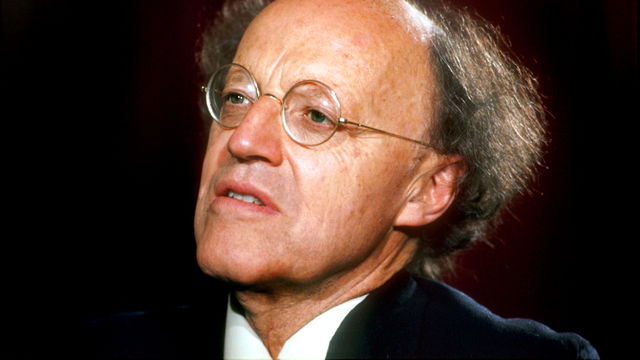
| Lord Jenkins of Hillhead |
ALDU read these papers and wrote the article below, highlighting the lies and back door manipulation that went on in 1967. Time and time again, successive governments have said that abortion is a matter of conscience and therefore any vote should be a free vote - without the parties ordering their members to vote one way or another. As the papers reveal, however, there are plenty of other ways that a government can make sure that it gets what it wants, whilst mendaciously telling us, the general public, that it is remaining neutral.
The ALDU article describes how Roy Jenkins was one of the main architects of these 'behind the scenes' activities and was a malign influence in the abortion debate. He was also one of the main driving forces behind many other "liberal" government policies of the day. He has a great deal to answer for.
Winter 1998/99 Number 80
Secret Cabinet Papers

More than thirty years have gone by since, in the summer of 1966, the then-young Liberal M.P. Mr David Steel saw fit to introduce into the House of Commons his Private Members' 'Medical Termination of Pregnancy Bill'. Having at a late stage had its title changed to the 'Abortion Bill', it passed onto the Statute Book as the Abortion Act 1967, receiving the Royal Assent on 27th October of that fateful year of 1967.
The papers of the Labour Government Cabinet of those days, which have until recently been secret under the well known 'Thirty Year Rule', are now publicly revealed and open to scrutiny, and very interesting they are too. We believe that our 3,000 members and the many other readers of our ALDU Newsletter may like to have the following points about them drawn to their attention, from which one sees at once that, as regards concern for the small and the weak and the helpless. Old Labour then was every bit as callous as New Labour is today.
 |
| Lord Gardiner |
The problem for Mr Steel - lack of time
The greatest difficulty which confronted young Mr Steel - the present Lord Steel of Aikwood, K.B.E. - and his misguided supporters in their attempts to have their proposed Bill passed into law was the lack of Parliamentary time which could be allotted to the Bill. As we have mentioned, this pernicious Bill introduced by that son of the Manse Mr David Steel M.P. was a Private Members' Bill, and since only a very limited amount of Parliamentary time is ever available to such Bills it is always possible for opponents of such Bills to delay their passage through Parliament (and thus prevent them from becoming law) by tabling a large number of amendments or by straightforward and very effective filibustering until the time allotted to them for Parliamentary debate has been exhausted. The Bill is thus 'talked out' and quietly fades away without trace and without, of course, becoming law.
Because of this procedural hurdle, without Governmental support it is, as the late Mr Enoch Powell M.P. and others have explained, almost impossible for a Private Members' Bill to become law unless it relates to some entirely uncontroversial subject which arouses little or no opposition. As most pro-lifers will know, the tactic of filibuster has been employed with enormous success against every pro-life Private Members' Bill which has been introduced into the House of Commons since 1968. The long and the short of the matter is that successive Governments, whether Old Labour, New Labour or Conservative, have been content to see the unjust killing of the small and the weak and the defenceless continue unabated. The only way in which a Private Members' Bill containing any controversial proposals can become law is by its obtaining in one way or another, by hook or by crook, the support and backing of the Government of the day.
This vital support of the Labour Government of the day was what the present Lord Steel of Aikwood's Bill obtained in 1967. Without such Governmental support five million innocent human beings in the United Kingdom would not have been deliberately killed by abortion, nor would their killers have been protected - supposedly at least, and certainly effectively - against being prosecuted for the very serious crime of procuring a miscarriage contrary to the provisions of the Offences against the Person Act 1861, (see sections 58 & 59 thereof, which even today, in 1999, still form the governing law relating to abortion, see sections 1 and 6 of the Abortion Act 1967).
The Labour Government of that time went to some pains to assert publicly, and to attempt (not very successfully) to explain, that its stance and attitude towards young David Steel's Bill was 'neutral', - and in fact the Bill was indeed a matter for a free vote with all party M.Ps exercising what were said to be their consciences. Nevertheless on at least two occasions the Labour Government allowed the Steel Bill extra time for debate without which the pernicious measure would have undoubtedly failed, and the discussions in Cabinet about whether this vital time should be given make very interesting and most instructive and illuminating reading.
In these recently-opened Cabinet papers we see that on llth May 1967, (by which time the Bill was at its Committee Stage, with its Report Stage and Third Reading in the Commons scheduled for 2nd June 1967), the Cabinet considered what action if any to take about the Bill in view of the likelihood that the Bill, being a Private Members' Bill, would not have sufficient time in which to complete its further stages in the House of Commons. It was correctly pointed out that for the Government to provide Government time for the Bill would imply clearly that the Government, far from being 'neutral', was in fact in favour of the Bill's principle. The argument was also put forward that, on an issue of such social importance involving the legalising of many abortions, the Government should give time to such a measure unless the Bill was 'bad in form' on emerging from Committee.
At that meeting of the Old Labour Cabinet on llth May 1967, it was reported that the Home Affairs Committee would be considering some amendments to Mr Steel's Bill proposed by the Home Secretary, the present Lord Jenkins of Hillhead, and it was felt that it would not be appropriate for the Cabinet to consider whether time should be given for the Bill until the result of the deliberations of this Home Affairs Committee was known. The Legislation Committee of the Cabinet was therefore asked to consider whether, once the discussion by the Home Affairs Committee had taken place and in the light of that discussion, the Bill should be given Government time. As a result, whether deliberately or by chance, Mr Roy Jenkins (as he then was), being Home Secretary and thus in charge of the Home Affairs Committee, was placed in a strategic position where his comments and his opinions on the topic of killing the small and the innocent would be of crucial and almost decisive importance.
The Roy Jenkins Memorandum
Having such a key role in decisions about whether or not young Mr Steel's appalling Bill was to receive from the Government Parliamentary time for debate, Mr Jenkins submitted a Memorandum dated 25th May 1967 to the Labour Cabinet's Legislation Committee for discussion at its meeting on 30th May 1967. This Memorandum of Mr Jenkins, concluding as it does with a personal and unqualified invitation from him, the Home Secretary, to the Legislation Committee to 'make it clear that Government time will be found', contains a number of interesting points. For example, this Jenkins Memorandum mentions that the Bill had been altered
'on the initiative of Mr Steel to permit abortions on grounds (inter alia) of risk of injury to the well-being of the unborn child',
but it goes on to point out that this brilliant David Steel idea to legalise the killing of an unborn child on the ground of risk of injury to his or her own well-being 'does not make sense'. Well said, Mr Jenkins!
 |
| Lord Diplock |
But his Memorandum had earlier said that the Bill was intended to clarify, and give statutory effect to, existing case law, and it quite wrongly and unjustifiably told the Legislation Committee that the existing case law 'permits abortions on grounds of risk to the life or health of the expectant mother'. This observation was wholly incorrect, for, as many of our readers and as all other competent lawyers may know, case law did not in fact permit any such thing at the time. Clearly Mr Jenkins had in mind Mr Justice Macnaghten's direction and summing-up to the jury in the case of R. v. Bourne [1939] 1 K.B. 687 when making this assertion to the Legislation Committee, but even at the time that Mr Jenkins was making his assertion (25th May 1967) it was well known that Macnaghten J.'s words did not form part of a judgment of the High Court but were nothing more than part of a summing-up to a jury, - a summing-up which, not surprisingly, was later courteously but devastatingly exposed for the loose-ended and very unclear piece of work that it was by Lord Diplock in his speech in the case of the Royal College of Nursing v. D.H.S.S., [1981] 2 W.L.R. 279 at 297 and 298. A mere summing-up to a jury, even when made by a judge with a much greater lucidity of legal exposition (see Lord Diplock's words at 297G) than was shown by Macnaghten J., is not at all the same thing as an authoritative judgment of the High Court. The Home Secretary (Mr Jenkins) in May 1967 should never have led the Cabinet's Legislation Committee to believe that the state of case law on the point in question was what he declared it to be.
Mr Jenkins' Memorandum went on to assure the Legislation Committee that the Bill would contain safeguards not then present in the existing law, saying, for example, that if the Bill were to become law an abortion would not be an offence under the law relating to abortion
'only if both the operating doctor and another doctor are of the opinion, formed in good faith, that one of the grounds permitted by the Bill is satisfied',
but in the event, when Her Majesty gave the Bill her Royal Assent on 27th October 1967 and made it the law of the land, it was found that it did not require that one of the two doctors expressing the needful opinion formed in good faith should be the doctor who kills the baby. We in our Association have more than once pointed out that one of many continuing scandals of the Steel Abortion Act of 1967 is that it imposes no requirement that either of the two opinion-forming doctors should have examined, or even met, the mother whose baby is to be killed.
So sloppily-drafted is the Steel Act of 1967 that one hardly need say in addition that not only, under its provisions, need neither of the two opinion-forming doctors have ever met, let alone examined, the mother, and not only need neither of these two doctors be involved in the abortion operation itself, but also neither of them need have any specific expertise, gynaecological, psychological or otherwise. Not surprisingly, after over 30 years grim experience of the working of the Abortion Act 1967 which came into force at the end of April 1968, everyone knows that the so-called 'safeguards' are no safeguards at all ; in so far as they provide safety to anyone they provide safety to the abortionists who - if (and only if) certain conditions are fulfilled - are protected from being prosecuted for their activities because of section 1 of the Act which provides that, in certain circumstances, their unjust activity 'shall not be an offence under the law relating to abortion'.
As to whether the law is being enforced by the law-enforcing authorities, the whole nation was assured on 27th August 1996, well over two years ago now, by a leading N.H.S. Consultant speaking on BBC Radio 4, that in fact N.H.S. doctors (for whose activity in this field the Prime Minister Mr Tony Blair and the Secretary of State for Health Mr Frank Dobson are of course both now responsible) currently 'flout the law of abortion as a matter of routine'.
The final and - to Mr Jenkins - the compelling reason why the Legislation Committee was urged by Mr Jenkins to ensure that Government time should be given to the Bill was contained in the final paragraph of the Memorandum which read as follows :-
'The arguments for and against abortion law reform, and the grounds on which abortions should be statutorily permitted, have now been very fully debated in both Houses, and it would be most unfortunate if Parliament were now prevented, by shortness of time, from reaching decisions on Mr Steel's Bill. We should then almost certainly have to go through the same trouble again next session.'
From this it would seem that this unjust Bill was given the Government time it needed to have any chance of becoming law in order to spare the M.Ps of 1967 the 'trouble' of having the question of abortion raised again at the next, or on a subsequent. Parliamentary session. On this basis, of course, - saving M.Ps 'trouble', -almost every Private Members' Bill containing controversial provisions ought to receive extra time from the Government of the day.
The Legislation Committee
The above-mentioned Jenkins Memorandum was duly considered by the Cabinet Legislation Committee on 30th May 1967 when, according to the Minutes of the meeting, the one and only member of the Legislation Committee who appears to have objected to this highly-exceptional proposal to give Government time to assist a Private Members' Bill was Lord Longford. His Lordship mentioned what an undesirable precedent would have been made if, once a Private Members' Bill had made substantial progress in both Houses of Parliament, it should then necessarily and on that account be accorded Government time.
The Cabinet
The Cabinet itself met on 1st June 1967. Mr Jenkins had been invited at the meeting of the Legislation Committee mentioned above to circulate a paper to the Cabinet 'in accordance with the summing-up of the (Legislation Committee's) discussion'. What the Cabinet received, however, was simply a further copy of the Memorandum mentioned above with an invitation from Mr Jenkins that the Cabinet should agree that
'we should, if necessary, make it clear that Government time will be found'.
 |
| Lord Longford |
At the meeting of the Cabinet, Mr Jenkins repeated the points contained in his Memorandum. Once again Lord Longford argued in Cabinet against the proposed action, but once again his warnings were not heeded ; the Cabinet resolved that Government time should be made available, and time was duly given. Even that crucial decision was not the end of the matter, however, for the Cabinet discussed the Bill again at its meeting on 6th July 1967, when the Cabinet once again decided that further time was to be given to the Bill, despite the objection that such a decision might compromise the Government's professed neutrality towards the Bill and despite the objection that his Bill would then be taking up Government time when there was other important national business to be dealt with. With so many hundreds of thousands of innocent human lives at stake, it is shocking to note from these Minutes of the Cabinet's discussions that these Cabinet decisions to give such crucially-important assistance to the Bill were made without the Cabinet giving any adequate consideration to the fundamental and very grave injustice of the Bill itself.
Conclusion
The conclusion is well known. The Medical Termination of Pregnancy Bill received the extra time it needed, its title was changed to the 'Abortion Bill', Her Majesty the Queen decided to give it her Royal Assent and the Bill duly became law as the Abortion Act 1967 in October 1967. As a result, at the time that this article is being written early 1999, just under 31 years after the Act came into force in late April 1968, some five million unborn babies have been killed and have had their killings notified to the Government under the terms of the Act and its subordinate Statutory Regulations ; in addition, the country has been assured that the criminal law relating to abortion is being flouted right, left and centre 'as a matter of routine'.
Not only is the law profoundly unjust, but it has had the effect of undermining the morale of the medical profession to the extent that the profession as a whole and individuals within that profession - with a few very honourable exceptions - have shown themselves unable to display the moral fortitude that their patients are entitled to expect. Even accepting that they have been manipulated by politicians and social engineers, it is nevertheless shocking to note how quickly the medical profession has abandoned the ethical principles and practices which had been unquestioningly accepted by all honourable medical people for over two thousand years.
It is shocking how quickly this has happened, but it has also happened with hardly a murmur of protest from doctors, nurses or their leaders, while the blatant refusal of both Old Labour and Conservative Ministers and then New Labour Ministers in recent years to take any action at all to prevent the law relating to abortion being flouted as a matter of routine has itself been a ferocious blow administered to the Rule of Law.

